Picking an Efficient Plan
It’s easy to fall in love with finishes. Tile, lighting, hardware — these choices are visible and satisfying. But they’re rarely what determines whether a home works long-term. The right floor plan will create a lasting home.
Before selecting materials, consider how a home is organized. Where you enter. Where you naturally pause. How you move from one space to another without thinking about it. A good floor plan supports daily routines quietly. A poor one asks you to compensate.
Here are a few tips for picking the right plan, whether from scratch or a reputable architecture studio.
Less is more. Our first iteration of the bay cottage was designed from scratch. The plan was wonderful and the process was exciting, but the resulting design was almost twice the size of the house we ended up building. Our original architect said it well, designing a house is like going to the grocery store hungry. You wind up coming home with a bunch of junk you don’t need.
We ended up scrapping the custom design and modifying an existing plan from Lake and Land Studio, which was the right move for us. Ultimately, the more space you have, the more you will need to maintain.
Circulation. Clear paths can matter more than room size. When circulation is awkward, furniture placement becomes forced and rooms feel smaller than they are. When it works, even modest spaces feel generous.
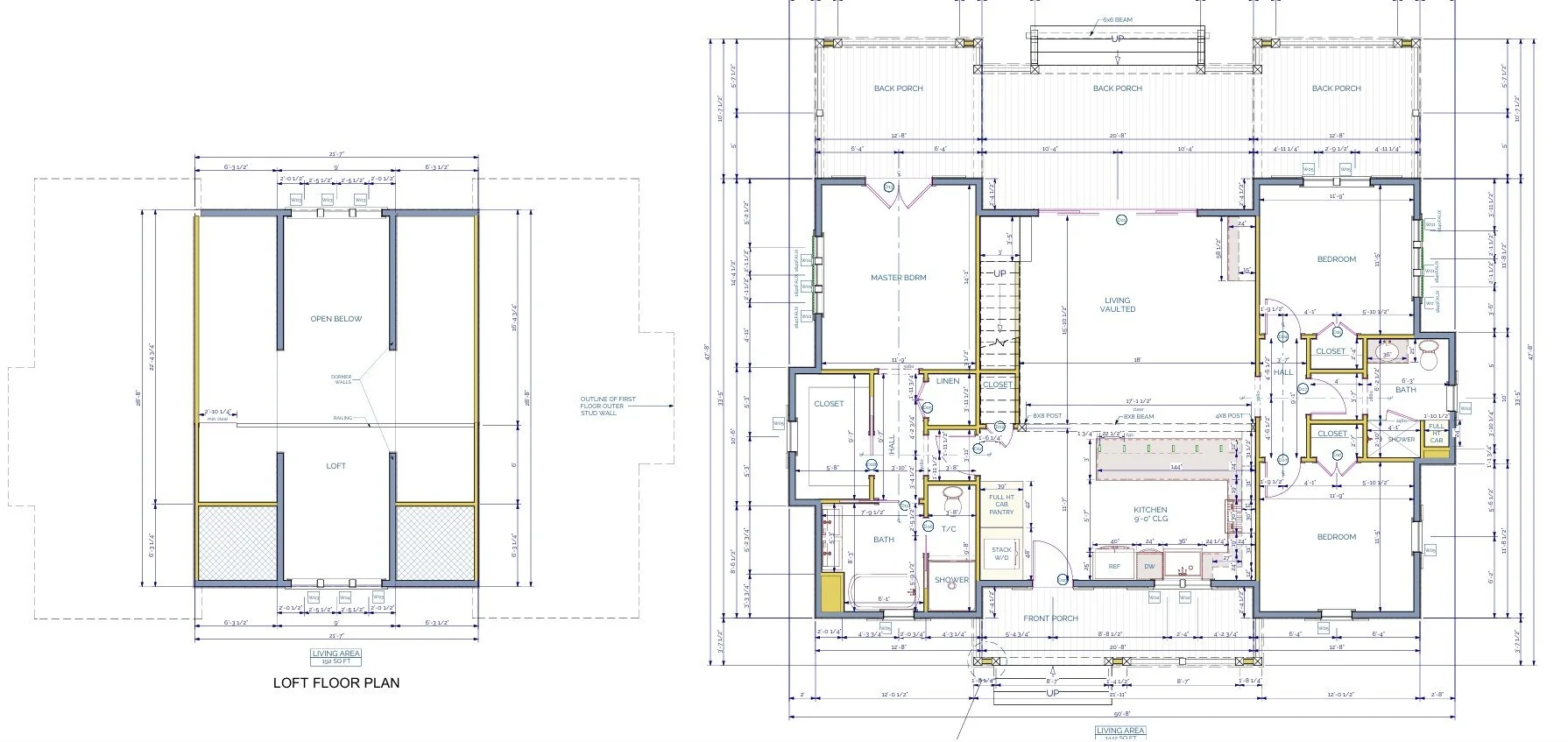
Proportion. Ideally, the square footage of each zone should be proportionate to how you live. For example, our primary bedroom (including closet and bathroom) accounts for one third of the first floor. When our kids are grown, we will spend the most time in the house and therefore our room commands more space.
The outdoor porch accounts for another third and we probably spend the majority of our waking hours on the porch – playing games, eating, and working – it’s even become a space for exercise.
The guest bedrooms, are compact, as are their closets, as they don’t see the same use as the rest of the house.
Lighting. A strong plan allows light to travel. Finishes can enhance that, but they can’t create it. Consider the site and where to capture (or shield) natural light throughout the day. A good plan will take the natural and artificial lighting into consideration.
Flexibility. Can a room change use over time? Can doors close when needed and open when they’re not? Homes that age well usually allow for adjustment without renovation.
Are there rooms that can do double duty? We wanted a play room and high-capacity bunk room, so we put them together in one space. We realized we ate outside year-round, so opted for a larger porch with ample dining space and a counter with barstools rather than an indoor dining room. The porch tables are ideal for dining, games, and work.
The kitchen is generous in proportion, but you walk directly into it. There is no entry hall or vestibule. This is appropriate for the laid-back bay lifestyle and the way we entertain. Think about how you host and use your space to maximize your plan.
Storage. An architect once told me that we rarely outgrow our living space. When we decide it is time to move, it is generally a function of outgrowing our storage capacity. Think about your hobbies, lifestyle, and storage needs and plan accordingly.
Finishes can always be changed. Floor plans are harder to undo. When the structure works, design decisions tend to fall into place more easily — and last longer.